.png)


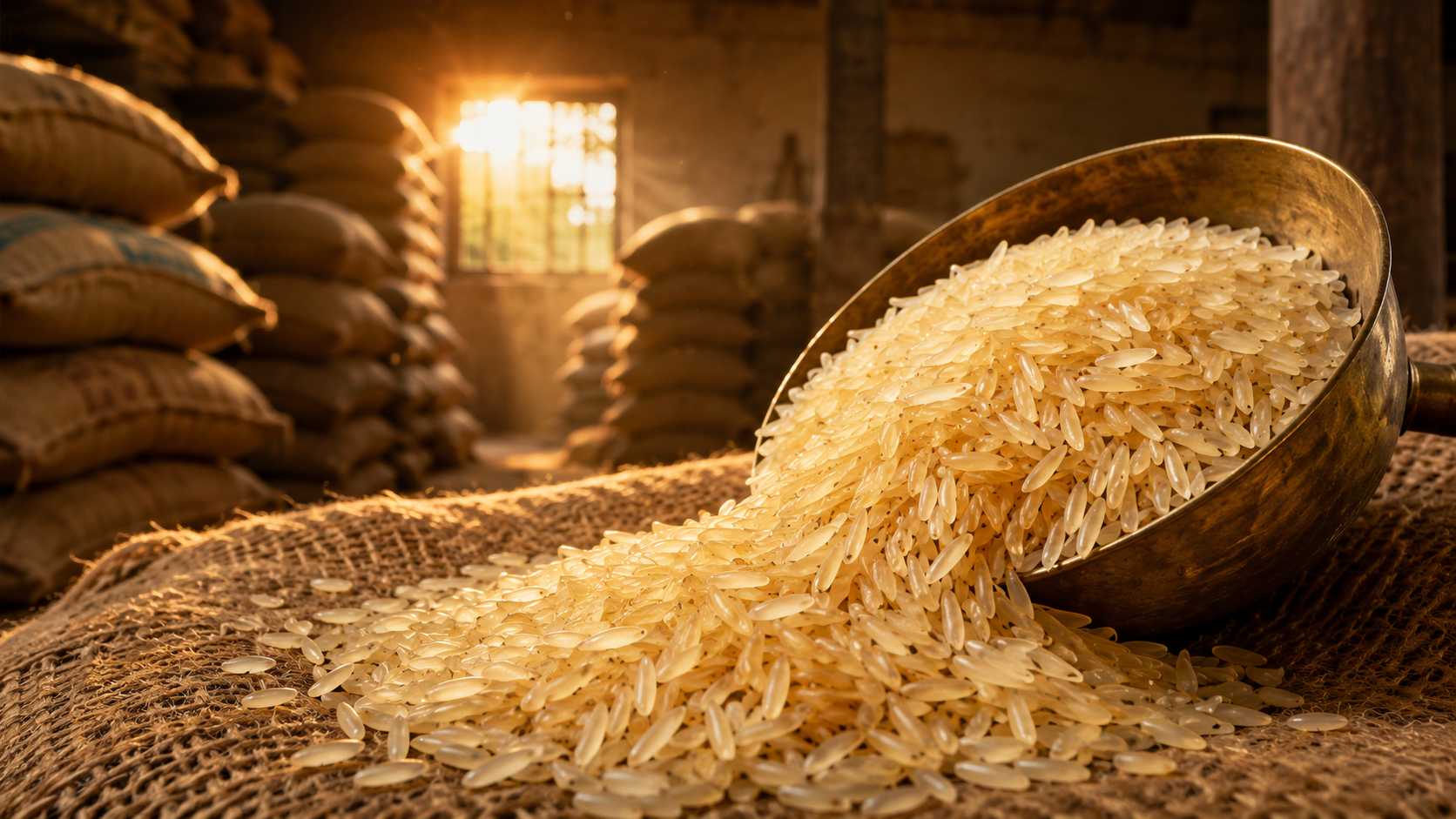
Ask any home cook what separates a good biryani from an unforgettable one, and the answer often has less to do with the spices than the rice itself. One of the biggest differences is something many people never think about: how long the rice has been aged before it reaches the kitchen.
What "aging" actually means
Freshly milled Basmati is technically edible immediately, but it behaves nothing like the fragrant, separate-grain rice you associate with a good biryani. Fresh rice holds more moisture, which means it tends to break and turn sticky under heat.
Aging is simply controlled, patient storage — usually 12 to 18 months — that lets the grain lose excess moisture gradually and its starches restructure. The result is a firmer grain that elongates rather than breaks when cooked.
"You can't rush a good grain, the same way you can't rush a good harvest."
Inside our Zirakpur warehouses
At our facility in Zirakpur, Punjab, every batch is logged by harvest date and stored in climate-controlled conditions before it's cleared for packing. We track humidity closely, because too much moisture invites spoilage and too little makes the grain brittle.
What changes during this period
- Grain length increase by up to 2x during cooking, compared with about 1.5x for unaged rice
- Aroma compounds concentrate, giving the signature Basmati fragrance
- Starch structure changes, helping grains remain separate after cooking
What this means for your kitchen
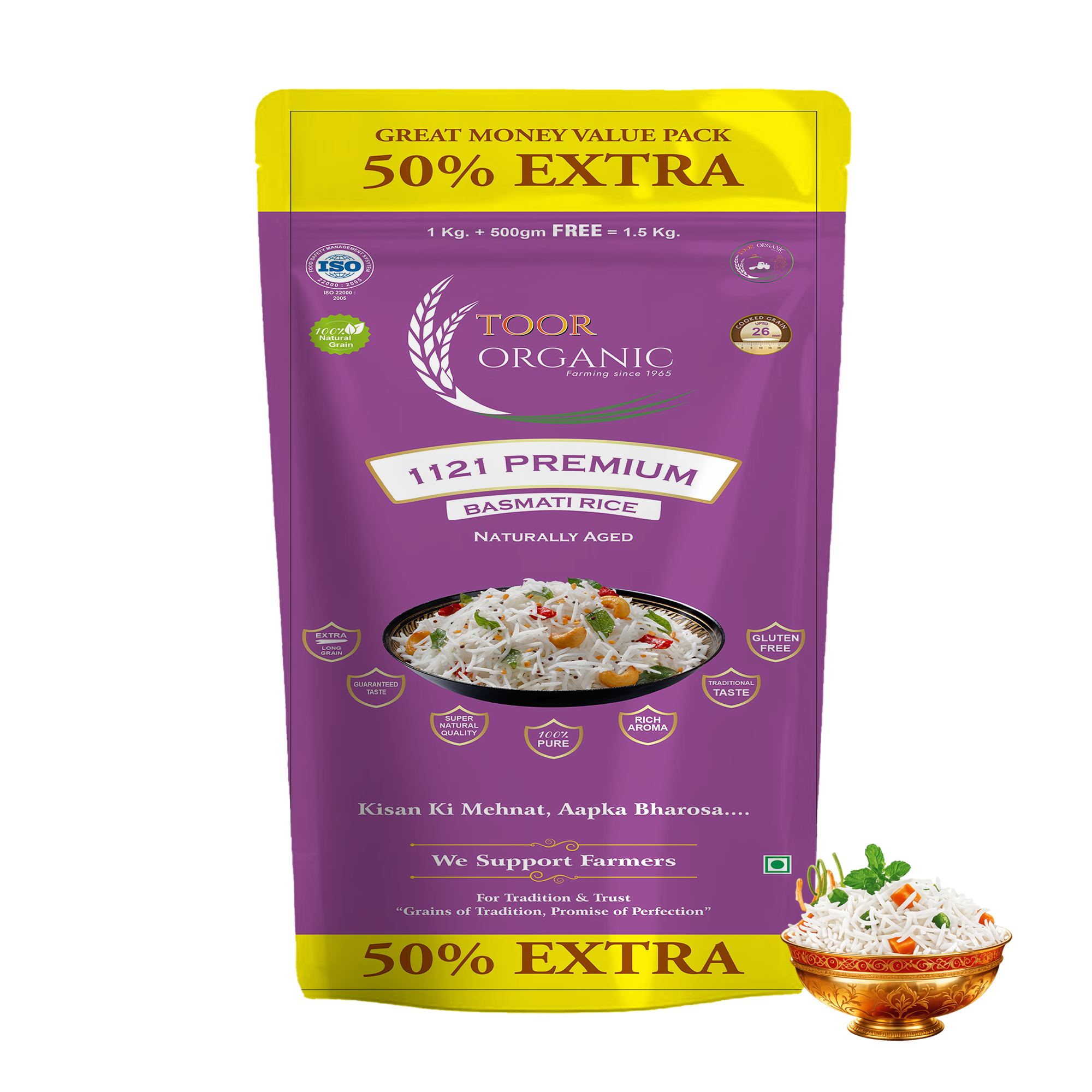
When you open a pack of Toor Organic 1121 Premium Basmati, you're opening rice that has already done the hard work of aging. That's why it holds up in a slow-cooked biryani, stays fluffy in a simple jeera rice, and doesn't turn mushy if it sits covered for a few extra minutes on the stove.
Next time you're deciding between rice brands, ask one question: how old is the grain? It's usually the real answer to why some rice simply tastes better.


.png)